Taxes
The 2027 US Tax Numbers for Americans Abroad
The IRS set the 2027 figures on November 5: the foreign earned income exclusion rises to $137,300. Every number a US citizen abroad needs, next to this season's 2026 figures.
 Aequify Team
Advising clients in this situation? Get a sample client report
The IRS published its 2027 inflation adjustments on November 5, 2026, in Revenue Procedure 2026-35. They apply to the 2027 tax year, which you report in 2028. The return most Americans abroad are about to file, for 2026, still uses the 2026 figures, so both are below.
The numbers that changed (2026, then 2027)
- Foreign earned income exclusion: $132,900, then $137,300 per qualifying person. A married couple who both work abroad can each exclude up to that amount.
- Foreign housing: the base amount you pay yourself before the housing exclusion starts goes from $21,264 to $21,968 (16% of the exclusion). The standard cap on housing costs goes from $39,870 to $41,190 (30%), with higher caps for the high-cost cities the IRS lists each year.
- Standard deduction: single $16,100, then $16,600. Married filing jointly $32,200, then $33,200. Head of household $24,150, then $24,925.
- Annual gift exclusion: $19,000, then $20,000 per recipient.
- Gifts to a spouse who is not a US citizen: $194,000, then $201,000 a year before gift tax reporting applies. This matters for the many mixed-nationality couples abroad.
- Gifts from foreign companies or partnerships: reportable on Form 3520 above $20,573, then $21,240. Gifts from foreign individuals and estates stay reportable above $100,000.
- Giving up citizenship: the income tax test for a covered expatriate rises from an average of $211,000 to $218,000 a year over the prior five years, and the exit tax exclusion from $910,000 to $940,000.
What does not change
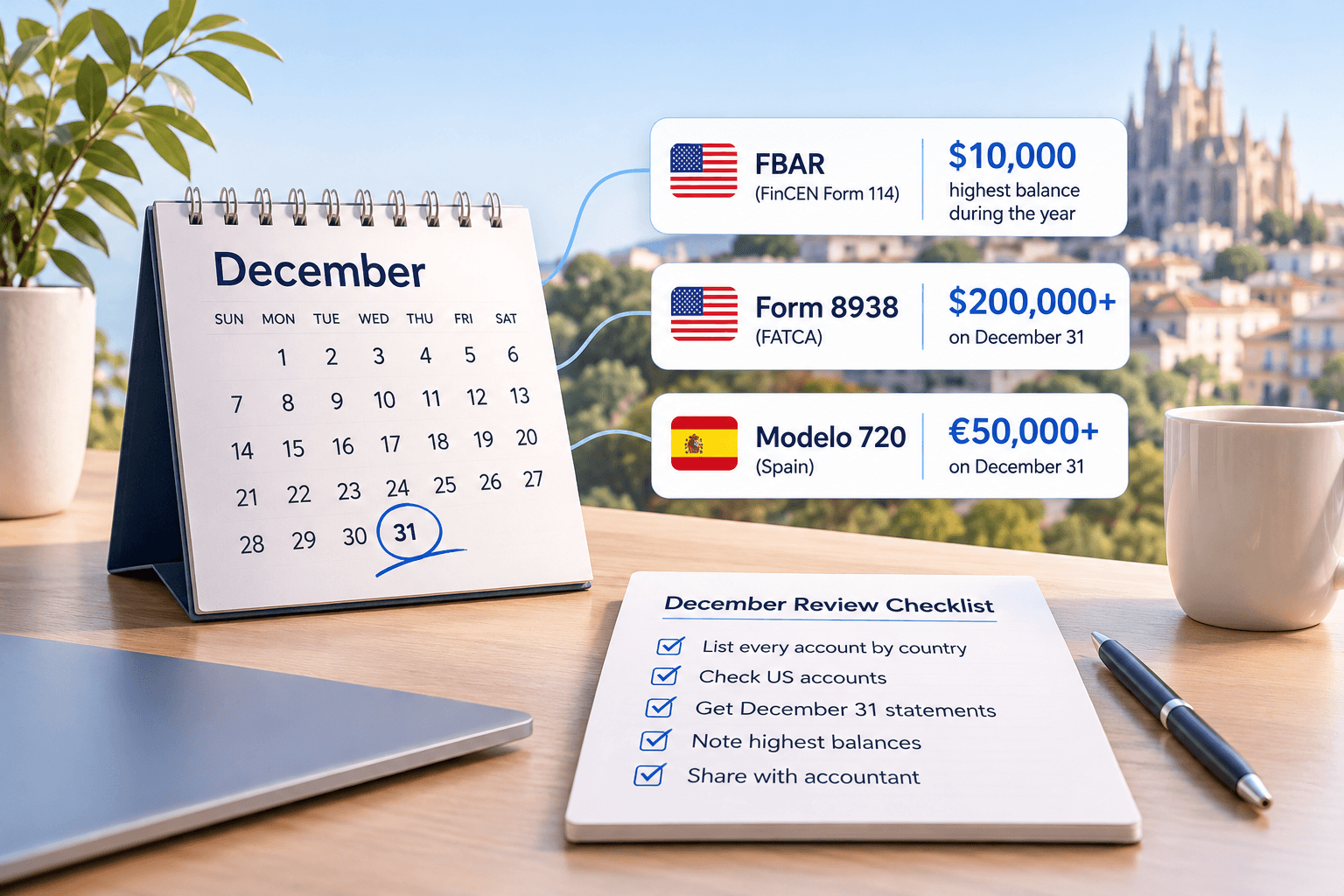
- FBAR: still required when your foreign accounts together exceed $10,000 at any time in the year. The threshold is set in regulation and is not adjusted for inflation.
- Form 8938: for taxpayers living abroad, above $200,000 on December 31 or $300,000 at any time (single), and $400,000 or $600,000 (married filing jointly). Not sure which accounts go where? Use our FBAR or Form 8938 account sorter.
What it means in practice
The exclusion covers earned income only: salary and self-employment income for work done abroad. Interest, dividends, rent and capital gains are still taxed, and you still file a return to claim the exclusion. If your salary sits near the limit, the extra $4,400 of headroom in 2027 can change whether the exclusion or the foreign tax credit works better for you; it is worth asking your tax adviser before the year starts.
For advisers, the useful habit is to keep the two years apart: 2026 figures for the returns and FBARs due in 2027, and 2027 figures for planning conversations now.
Where Aequify fits
Aequify brings your accounts in every country into one view and keeps the year-end and highest balances your FBAR and Form 8938 need, so filing season starts with the numbers already in hand.
General information, not tax advice. Figures come from IRS Revenue Procedures 2026-35 (2027) and 2025-32 (2026); the housing base and cap are the standard 16% and 30% of the exclusion. Confirm your own position with your tax adviser.