Taxes
The December Client Review: Year-End Values to Capture for US-Connected Clients Abroad
A one-page December checklist for advice firms: the year-end and highest balances FBAR, Form 8938 and Modelo 720 need, and who collects each by Jan 1.
 Aequify Team
Advising clients in this situation? Get a sample client report
Most US-connected clients abroad will not think about their reporting until January. By then, the numbers their accountant needs are already fixed: the value of each foreign account on December 31 and the highest balance it reached during the year. A short review in December lets your firm capture those figures once, while you still have the client's attention, instead of chasing statements in February.
Who this is for
Advice firms in Spain, Portugal, the UK and elsewhere in Europe with clients who are US citizens or green card holders, or who hold US accounts while living abroad. Your firm advises; the client's accountant files. This checklist sits between the two.
The three reports and the number each one needs
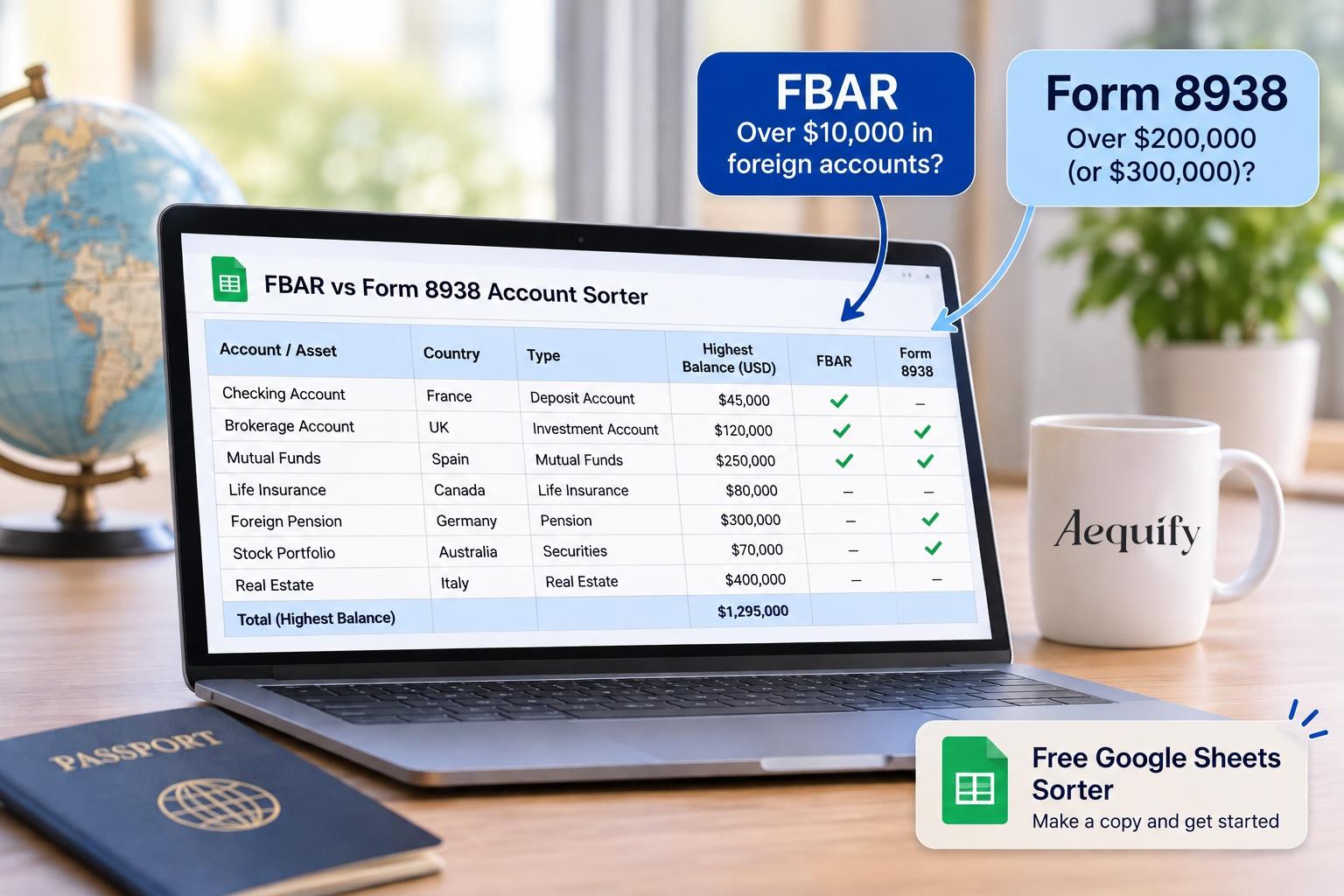
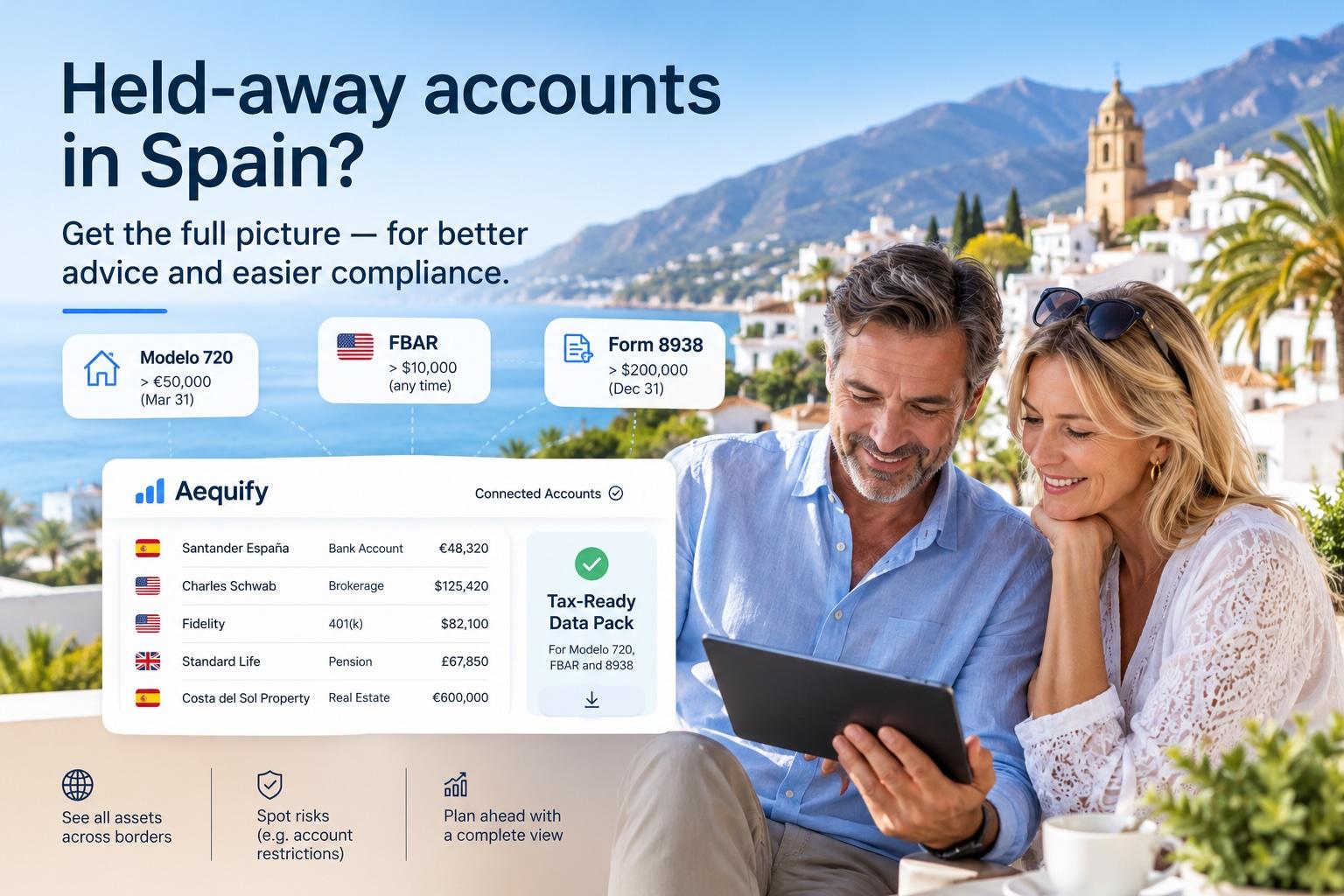
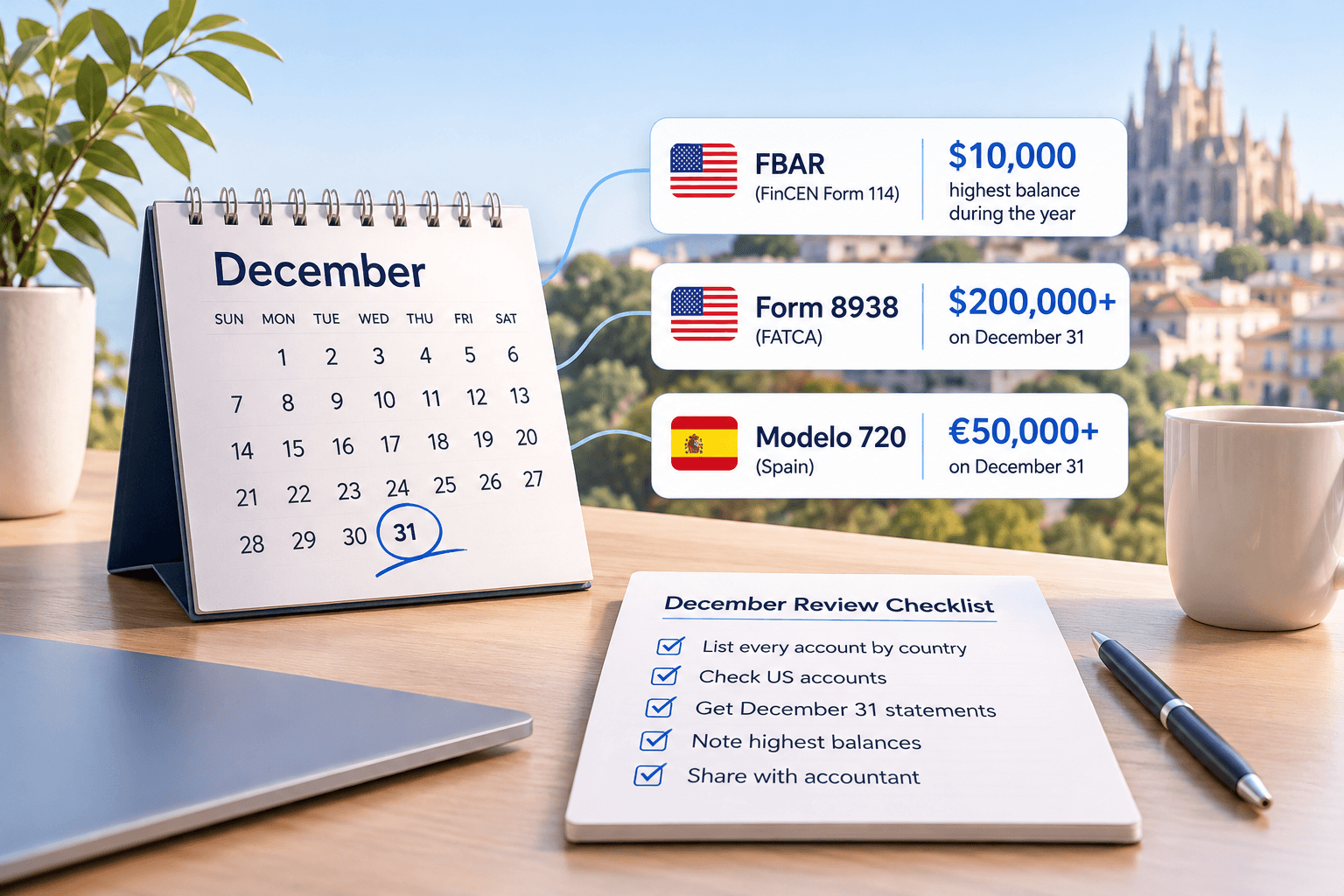
- FBAR (FinCEN Form 114): filed by US persons whose foreign accounts together exceed $10,000 at any time in the year. It uses the highest balance of each account during the year. Due April 15, with an automatic extension to October 15.
- Form 8938 (FATCA): filed with the US tax return by taxpayers with specified foreign assets. For those living abroad the thresholds are above $200,000 on December 31 or $300,000 at any time (single), and $400,000 or $600,000 (married filing jointly). It uses the year-end value and the highest value.
- Modelo 720 (Spain): filed by Spanish tax residents when any one category (accounts, securities, real estate) exceeds 50,000 euros. It uses December 31 values, plus the fourth-quarter average for accounts. Filed January 1 to March 31.
FBAR values are converted to dollars at the US Treasury rate for the last day of the year, so the December 31 statement is the one to keep.
The December review, in five steps
- List every account by country and institution, including the ones you do not manage. Held-away accounts are where the surprises are.
- Flag US accounts with a foreign address on file. Several US brokers restrict customers who live abroad; a restriction found in January is harder to fix.
- Ask for the December 31 statement for each foreign account, or confirm you will receive it.
- Note the highest balance in the year for each foreign account, or the month it likely peaked.
- Agree who sends what to the accountant, and by which date in January.
Where Aequify fits
Aequify gives your firm one view of each client's accounts across countries, including held-away assets, and produces a tax-ready data pack the client's accountant can use for FBAR, Form 8938 and Modelo 720. Clients connect their accounts once; the year-end and highest balances are there in January without a statement hunt.
This checklist is general information for advice firms, not tax advice. Filing rules and thresholds come from the IRS, FinCEN and the Spanish Tax Agency; confirm each client's position with their tax adviser.