
TaxesGlobal Mobility
Is the IRS Streamlined Program Ending? What Changed in 2026
Is the IRS Streamlined program ending? No end date has been announced, but on July 1, 2026 the IRS removed the no-penalty route for late FBARs. What changed and what to do if you are behind.
 Aequify EditorialEditorial @aequify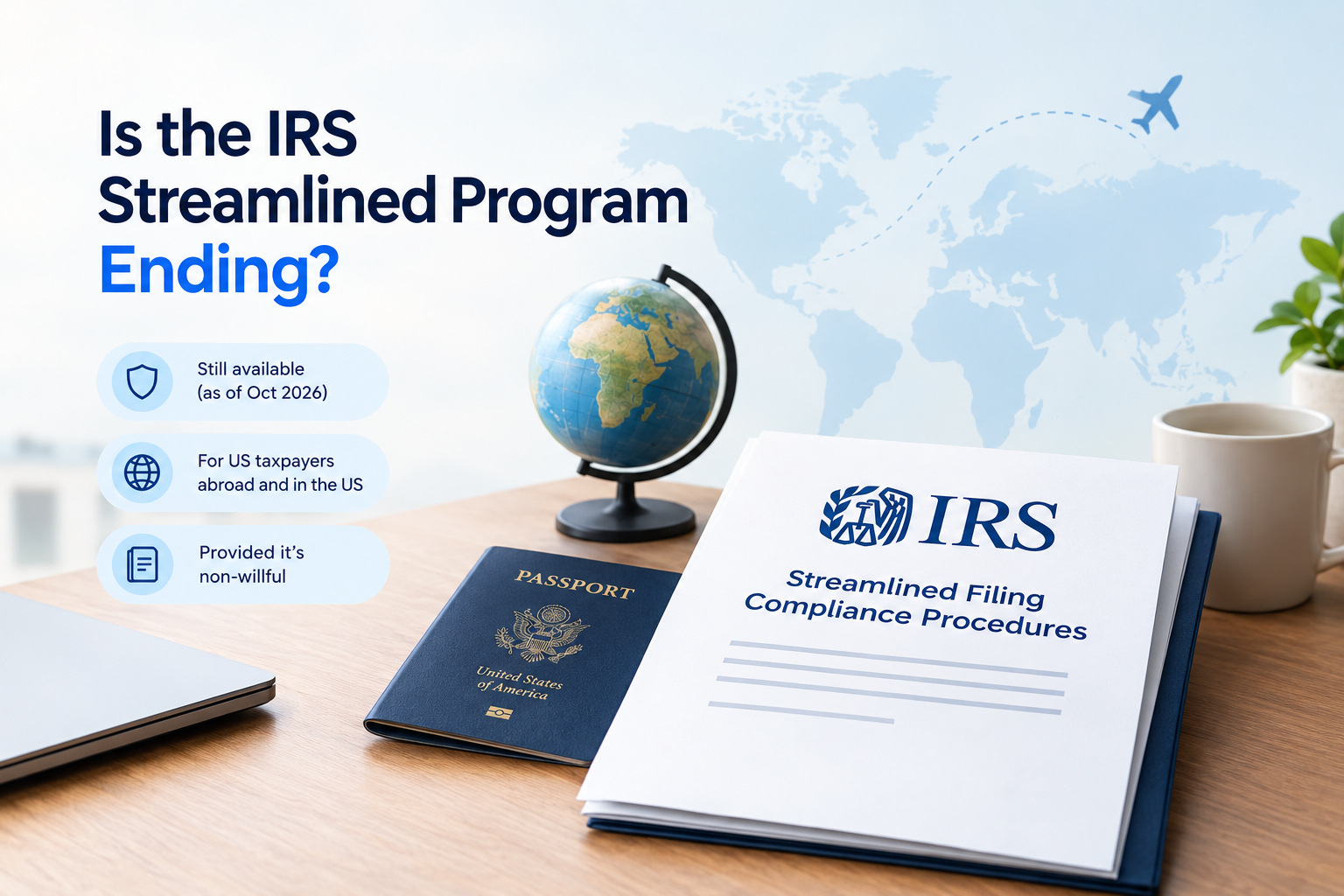
Is the IRS Streamlined Program Ending?
If you’ve heard that the IRS is getting rid of programs that help taxpayers catch up on missed offshore filings, you may be wondering: Is the Streamlined Filing Compliance Procedures next?
The short answer is no, not right now.
As of October 2026, the IRS has not announced an end date for the Streamlined Filing Compliance Procedures. The program is still available to eligible US taxpayers living abroad and to certain taxpayers living in the United States.
That said, there is a reason people are asking the question. In 2026, the IRS removed another offshore compliance program without much warning. That has left many taxpayers wondering how long the Streamlined program will remain available.
So, is the Streamlined program ending?
There is currently no announced end date.
The IRS first introduced the Streamlined Filing Compliance Procedures on September 1, 2012. The program has been expanded and changed over the years, but it remains available today.
Of course, that doesn't mean the program will be around forever. IRS programs can change or disappear, sometimes with little advance notice.
That's why, if you believe you qualify for Streamlined, waiting for a future announcement may not be the best strategy.
Why are people worried?
A big part of the concern comes from what happened with the Delinquent FBAR Submission Procedures.
On July 1, 2026, the IRS removed those procedures from its website.
The program had provided a relatively straightforward way for taxpayers who had already reported their income but had failed to file an FBAR to submit their late FBARs without a penalty.
According to reports from tax practitioners, the IRS is now telling taxpayers that a late FBAR is a violation that may result in penalties and is encouraging taxpayers who are not under examination to file their late FBARs as soon as possible.
There may still be ways to request penalty relief based on reasonable cause, but there is no longer a published no-penalty procedure specifically for this situation.
And this isn't the first offshore compliance program the IRS has ended. The 2014 Offshore Voluntary Disclosure Program, for example, was closed in September 2018.
So the concern about Streamlined isn't coming out of nowhere.
What does this mean if you're behind on your US taxes?
It depends on your situation.
If you live outside the US and missed tax returns and FBARs
The Streamlined Foreign Offshore Procedures are still an important option if your failure to file was non-willful.
Generally, the program allows eligible taxpayers living abroad to catch up on their US tax filings while avoiding the offshore penalty that applies under the domestic version of the program.
You'll generally need to file your most recent 3 years of delinquent or amended tax returns and 6 years of FBARs, along with a certification explaining that your failure to report was non-willful.
If you're in this situation, you can read our step-by-step guide to the Streamlined Foreign Offshore Procedures.
If you reported your income but forgot your FBARs
This situation is a little different.
The Delinquent FBAR Submission Procedures are no longer available, so there isn't currently a simple published IRS route that lets you file late FBARs with automatic penalty relief.
You should generally file the late FBARs as soon as possible and speak with a US tax professional about whether reasonable cause can support penalty relief or whether another compliance procedure, including Streamlined, may apply to you.
If you live in the United States
The domestic version of the Streamlined program may still be available if you meet its requirements.
One important difference is the penalty. Under the Streamlined Domestic Offshore Procedures, eligible taxpayers generally pay a 5% miscellaneous offshore penalty based on the highest year-end value of certain foreign financial assets.
The foreign version of Streamlined does not have this 5% penalty.
Why waiting can be risky
One of the biggest things to understand about Streamlined is that timing matters.
The program is generally available only before the IRS has started an examination or contacted you about the returns involved. Once the IRS begins an examination, you may no longer be eligible to use Streamlined.
And, as the July 2026 change to the FBAR procedures showed, IRS programs can change.
That doesn't mean you should panic. But if you already know you're behind, it may be worth understanding your options now rather than waiting to see whether the rules change again.
The part that can take the longest: finding your old account balances
For many people, the hardest part of getting caught up isn't actually preparing the tax forms.
It's finding the information needed to prepare them.
A Streamlined filing includes 6 years of FBARs, and each FBAR requires you to report information about your foreign financial accounts, including the highest balance during the year.
If you've lived in multiple countries or have accounts with several banks, brokers, pension providers, or investment platforms, finding six years of statements can take a lot of time.
You may have to contact old banks, search through emails, download statements, and work out which accounts were open during each year.
That's where Aequify can help
Aequify connects your financial accounts across countries and organizes your account information and balances into one place.
Instead of hunting through years of statements and different financial institutions, you can have a consolidated view of your accounts that you and your accountant can use when preparing your tax filings.
The bottom line
The IRS Streamlined Filing Compliance Procedures have not ended as of October 2026.
But the IRS has recently removed another offshore compliance program, so it's understandable that taxpayers are asking whether Streamlined could be next.
If you know you're behind on US tax returns or FBARs, don't assume the current rules will always be there. Take the time to understand your options and speak with a qualified US tax professional about the best way to get caught up.
The earlier you understand your situation, the more options you may have.
This article is for general informational purposes only and is not tax or legal advice. IRS procedures can change, so confirm the current rules with the IRS and a qualified US tax professional before filing.